|
|
|
|
YOUR WEEKLY DIGEST • VOLUME 1, ISSUE 13 • MARCH 30, 2026
|
|
|
|
|
|
|
Public Policy Stories on Economic, Racial, and Educational Justice in Early Childhood Education
|
|
|
|
|
BY JAMIE CHO, NINDERJIT GILL, SAMANTHA CARILLO MASTACHE AND LEANNE DIXON
|
|
|
|
Early childhood professionals foster the next generation to be leaders, advocates, activists, and carers as they grow and learn from those who demonstrate these values and the feeling of belonging. Children deserve and should have their fundamental right to enjoy a culturally responsive, nurturing, and intellectually stimulating early learning environment that validates and honors their genius, creativity, and interests.
|
|
|
|
|
|
Unfortunately, early learning professionals’ noble work and contributions to society continue to be diminished and invisible. In changing the narrative around early childhood, we offer these stories that illustrate the need for advocacy and public policy that values children, and the experts who nurture them.
We boldly proclaim that this call for action is aligned with larger movements toward economic, racial and educational justice, because we are not free until we all are free. In recognizing the struggles of those who have been most minoritized by inequitable systems, and centering their needs in this moment, we believe that we can be the change we want to see in this world.
READ THE ARTICLE >>
|
|
|
Reflect: The authors urge everyone to help advocate for economic (and other forms) of justice for the ECE field. What is one small step you could take to do so?
|
|
|
|
|
|
|
|
|
|
|
|
|
The Wonder of Woodwork in Early Childhood Education
|
|
|
|
|
|
|
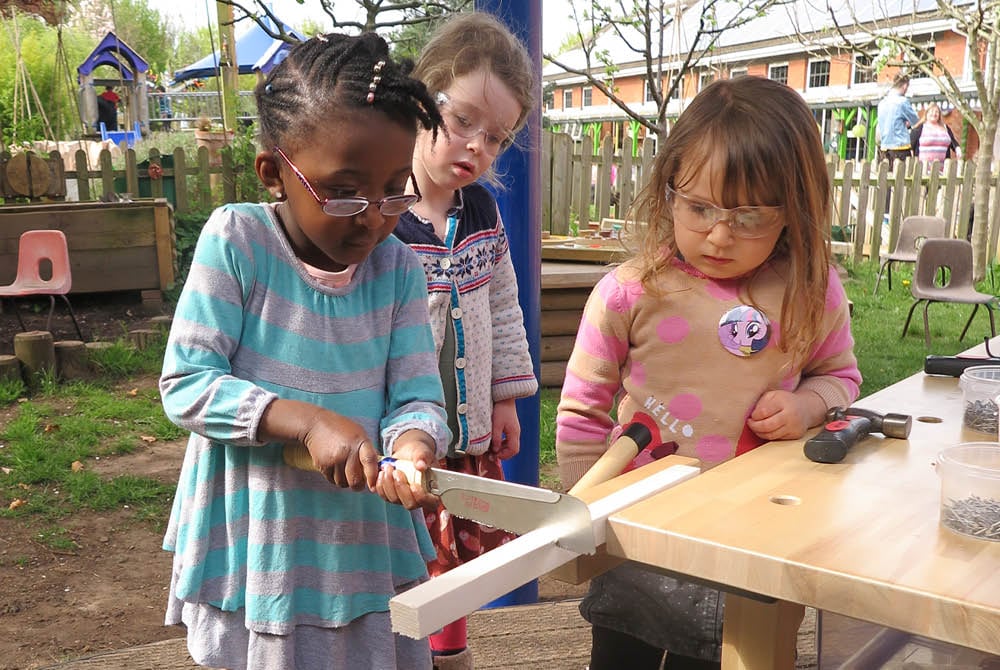
Millie (4) has a satisfied radiant glow. She is admiring her work after spending two hours in the woodwork area where she has been engrossed constructing a bed for a princess. She used the hammer, hand-drill, screwdriver and a small pull-saw. It was a complex process, first designing then making, adapting and resolving problems as she went.
She had to adapt and problem-solve, using creative and critical thinking skills throughout for example cutting sections of wood so they would be the right size to fit. She joined her four legs, but was disappointed to discover that the bed was wobbling. On closer examination, she realised this was because one leg was too long. The next problem was how to remove it, and then how to get it the right length. Woodwork certainly throws up lots of problems! Millie finished by elaborately decorating the bed with beads and buttons, ensuring it was a bed fit for a princess.
Millie made a wonderful bed, but what was really ‘made’ was within Millie. Seeing her sense of agency flourish as she put her ideas into action, and seeing her confidence grow as she mastered the tools were both clearly visible. We also know by using the multitude of creative and critical thinking skills involved in the making, new neural connections and pathways will have been established. This is the wonder of woodwork. It can be truly transformational.
READ THE ARTICLE >>
|
|
|
Reflect: The author provides many reasons for including woodworking in early care and education settings. Which of his reasons were the most compelling for you?
|
|
|
|
|
|
|
|
|
|
|
|
|
TimberNook and the Power of Outdoor Learning: Implications for Early Childhood Education
|
|
|
|
|
|
BY LISA RANFOS, LAUREN FERGUSON, MARISSA AUDY, SARAH JEFFERSON AND SANDY BERGE
|
|
|
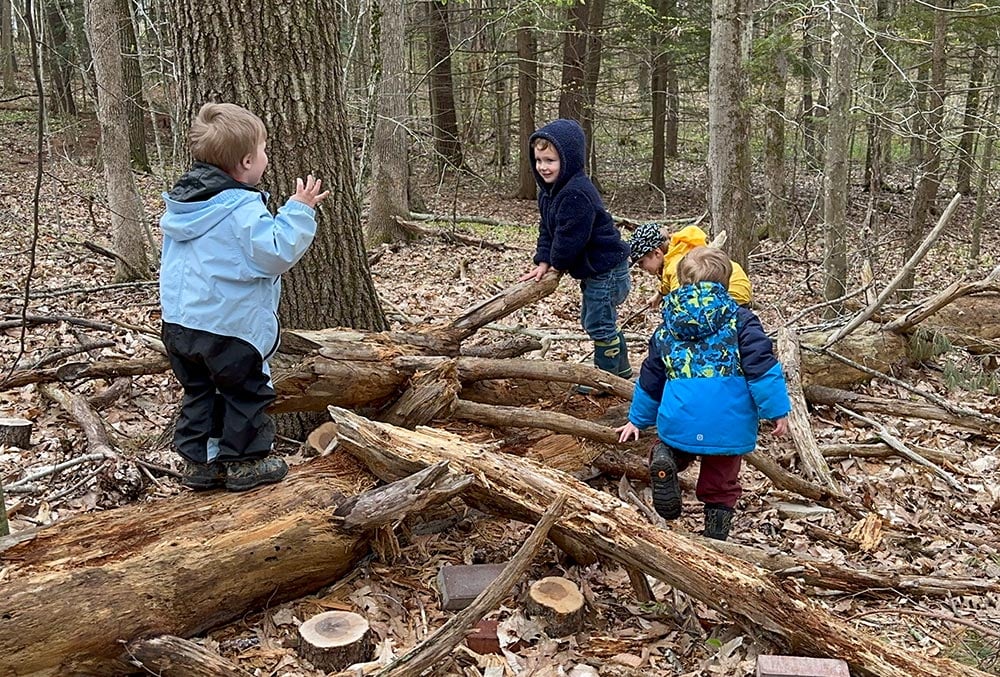
Outdoor learning experiences have long been associated with children’s physical, social, emotional, and cognitive development. Yet despite these benefits, many early childhood programs struggle to integrate extended outdoor play into daily practice due to academic pressures, safety concerns, and structural limitations. To explore the perceived impact of TimberNook, an international outdoor curriculum emphasizing child-led, sensory-rich, open-ended play, on children’s development, teacher practice, and school culture, researchers from the University of New Hampshire implemented a mixed-methods study. Focus groups with parents of children attending TimberNook programs (n = 22), teachers working in TimberNook schools (n = 14), and administrators of TimberNook schools (n = 5) informed the development of surveys distributed to a larger sample of parents (n = 114), teachers (n = 16), and administrators (n = 12). Findings indicate that TimberNook supports children’s independence, problem-solving, creativity, emotional regulation, and physical development. Teachers and administrators reported shifts in instructional practices, increased collaboration, and improved personal well-being. These results highlight the potential of structured outdoor curricula to strengthen whole-child development and positively influence early childhood program culture.
READ THE ARTICLE >>
|
|
|
Reflect: The authors present compelling research that outdoor, nature-based play promotes joyful, resilient, holistic learning. What are you doing to bring more of this learning to your programs, or to discuss this idea more in your college courses?
|
|
|
|
|
Exchange Community Voices
IS MADE POSSIBLE BY OUR DEDICATED SPONSORS:
|
|
|
|
|
|
|
|
|
|
|
Exchange Community Voices is brought to you by our Exchange Staff with Nancy Rosenow as Editor-in-Chief. Our collaboration with Exchange Strategic Partners supports early childhood professionals worldwide.
|
|
|
|
|
|
|
|
|
|
|
|
|
This email was sent to _t.e.s.t_@example.com by
Dimensions Educational Research Foundation, 7700 A Street, Lincoln, Nebraska 68510, United States
(800) 221-2864 | info@exchangepress.com
Exchange Press is a program of Dimensions Educational Research Foundation, a 501(c)3 non-profit organization.
Copyright © 2026 Dimensions Educational Research Foundation, All rights reserved.
|
|
|
|
|
|
|
|
|