|
|
|
|
YOUR WEEKLY DIGEST • VOLUME 1, ISSUE 20 • MAY 18, 2026
|
|
|
|
|
|
|
|
|
Taking Action: Channeling Collective Grief Towards Social Justice and Change
|
|
|
|
|
BY JAMIE BONCZYK AND LUCY RECIO
|
|
|
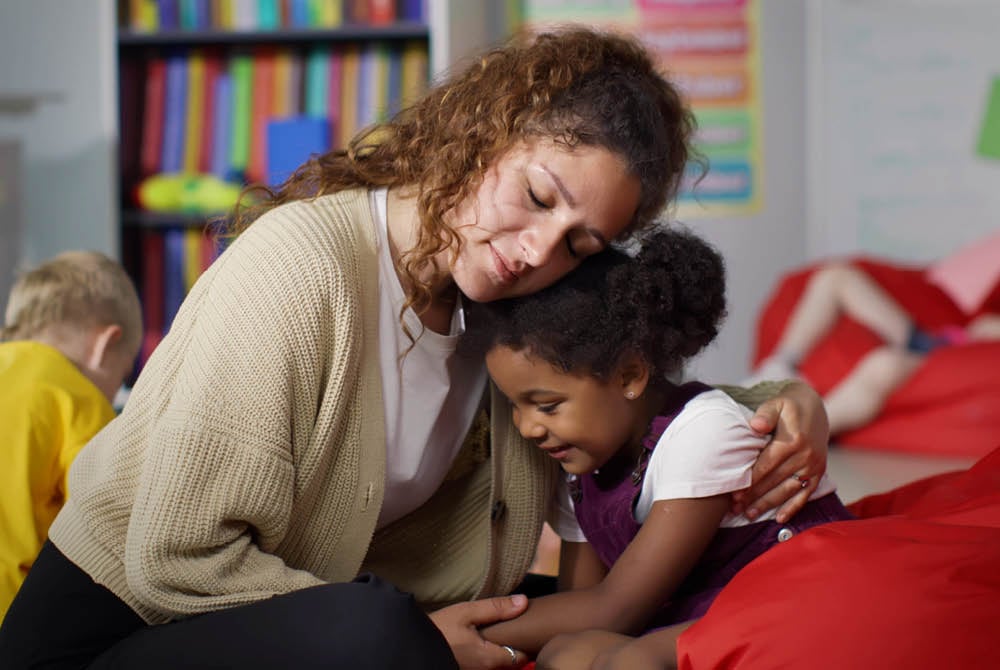
In the first article of this series, "Taking Stock: Is Personal Grief the Invisible Companion Informing How You Show Up?" in January 2026, we explored how personal grief can become an “invisible companion,” shaping the inner landscape of how we show up as caregivers and leaders. In the second "What’s at Stake? Professional Loss and Grief in Early Care and Education Workplaces" in March 2026, we widened the lens to the workplace, naming grief as pervasive in early care and education—often unspoken, often misread as burnout, disengagement, or poor performance. We also argued for grief literacy and for structures that allow people to feel seen, supported, and witnessed as they move through loss.
This final article expands the lens one more time: beyond the individual and the workplace, to the societal and systemic conditions that create, distribute, and intensify grief in the communities we serve. These conditions are shaped and amplified by Adverse Community Experiences, including chronic poverty and unemployment, disinvestment and gentrification, forced displacement, and the erosion of cultural anchors. Inequitable access to safe housing, reliable transportation, healthcare, and early learning; exposure to environmental hazards; community violence and threats of harm; immigration enforcement policies that create fear and unpredictability; and systems of over‑policing or under‑protection all form the backdrop of daily life. Collective trauma from domestic terrorism, hate crimes, and political instability to repeated community loss further deepens the weight children and caregivers carry.
READ THE ARTICLE >>
|
|
|
Reflect: In this third article offering tools for dealing with grief, the authors share these questions from Malkia Devich-Cyril: “How can the grief resulting from deep, communal loss move us to change and transform our conditions? How can it point us toward a hopeful and inspired new way of living? Towards the direction of justice?”
|
|
|
|
|
|
|
|
|
|
|
|
|
Trauma Impacts Everyone: Tools That Can Help
|
|
|
|
|
|
|
In the beautiful sunny early morning hours of September 11, 2001, I had just finished cleaning up breakfast and was preparing to start my busy day with young children in my family child care program when the phone rang. Normally, I would let it go to voicemail when I was fully engaged with the children, but we hadn’t quite started yet, so I glanced at the caller ID and, seeing it was my husband, I picked it up.
He had an unusual nervousness in his voice as he asked, “Have you heard?” This was during the flip-phone era before we were used to having the Internet in our pockets. All the children had arrived by 7:30 a.m., and I wasn’t expecting to see another adult until the first parent picked up in the afternoon, so no, I hadn’t heard whatever he was talking about.
He said, “I am going to tell you something really scary, and I don’t want the children to overhear, so try not to repeat what I say.” This was super weird, and now I was terrified. When a loved one calls you at an unexpected time and starts with a statement like that, it’s easy to imagine that something horrible has happened to them. He assured me that he was okay, but the world was not.
READ THE ARTICLE >>
|
|
|
Reflect: The author writes: “My hope for the field is to understand that trauma-informed care is not about treating trauma—it’s about creating environments, relationships, and responses that promote safety, connection, and resilience for all children.” How are you doing this?
|
|
|
|
|
|
|
|
|
|
|
Serving Twice-Exceptional Children
|
|
|
|
|
|
I recently published a college textbook entitled, Educating Children with Exceptionalities, published by Goodheart-Willcox (2027). In the book I cover typical issues involved in working with and teaching young children with developmental delays/disabilities (both terms are used in the field). I also address various approaches to teaching young children who are gifted and talented (GT).
|
|
|
|
|
|
Finally, the book explores ideas for teaching young children who are twice-exceptional: GT students with delays/disabilities, and children with delays/disabilities who are also GT.
The Eugenics Movement
Before discussing exceptional children, we need to examine our history involving people with delays/disabilities, and giftedness. This history revolves around the eugenics movement, from the late 1800s to mid-1900s. This movement grew from the creation of the IQ test. Alfred Binet developed the IQ test in France to help identify children who could benefit from additional and targeted assistance. However, after these tests came to the US, they were adapted and used to sort people by intelligence. Children were classified as gifted, normal, and feeble-minded (low IQ). Military recruits were tested using the Army Alpha and Beta Intelligence Tests.
Results of these tests were then used to “improve the race.” Children and people with low IQs—mostly immigrant, poor and minority people and children—were sterilized and institutionalized; results of the Alpha and Beta tests were used to “prove the intellectual superiority of White soldiers.” The eugenics movement was fully embraced by the national medical, educational, political and criminal justice institutions in both the US and Britain.
READ THE ARTICLE >>
|
|
|
Reflect: In what ways has the author’s discussion of twice-exceptional children impacted your thinking?
|
|
|
|
|
Exchange Community Voices
IS MADE POSSIBLE BY OUR DEDICATED SPONSORS:
|
|
|
|
|
|
|
|
|
Exchange Community Voices is brought to you by our Exchange Staff with Nancy Rosenow as Editor-in-Chief. Our collaboration with Exchange Strategic Partners supports early childhood professionals worldwide.
|
|
|
|
|
|
|
|
|
|
|
|
|
This email was sent to _t.e.s.t_@example.com by
Dimensions Educational Research Foundation, 7700 A Street, Lincoln, Nebraska 68510, United States
(800) 221-2864 | info@exchangepress.com
Exchange Press is a program of Dimensions Educational Research Foundation, a 501(c)3 non-profit organization.
Copyright © 2026 Dimensions Educational Research Foundation, All rights reserved.
|
|
|
|
|
|
|
|
|