|
|
|
|
YOUR WEEKLY DIGEST • VOLUME 1, ISSUE 11 • MARCH 16, 2026
|
|
|
|
|
|
|
|
|
A Way Forward for Child Care Educator Staff Supply, Diversity, and Competence
|
|
|
|
|
BY VALORA WASHINGTON AND ELIZABETH SPISICH
|
|
|
For decades, the child care industry has faced persistent challenges in workforce supply, diversity, and competence. Despite government recognition of child care’s economic importance, addressing systemic barriers in compensation and professional development remains costly and difficult.
Consequently, workforce development strategies often reflect two distinctive paradigms or modalities. First: child care—“the workforce behind the workforce”—is often positioned as a wraparound service that enables other professionals to work, rather than as an industry in its own right. Second: child care employers are often siloed and work separately from the workforce and training agencies. This means that employers spend a significant amount of time on hiring and training staff. For smaller programs in particular, this role usually falls to directors who struggle to find time to review candidates’ resumes, interview, and onboard new staff while also overseeing the day-to-day operations of the center.
Is there a way forward? To transition from traditional approaches, we need to consider how to truly transform the landscape for child care educators.
READ THE ARTICLE >>
|
|
|
Reflect: The article discusses the importance of educator-centric design—an approach that places early childhood educators’ lived experiences, needs, and aspirations at the center of every decision, rather than treating them as end users of pre-determined systems. How does this concept have relevance for the work you do?
|
|
|
|
|
|
|
|
|
|
|
|
|
Documentation Visual Story: Hello There, Beacon of Light
|
|
|
|
|
|
|
BY CHARLOTTE HUNT, BELLA MONK AND JEN SELBITSCHKA
|
|
|
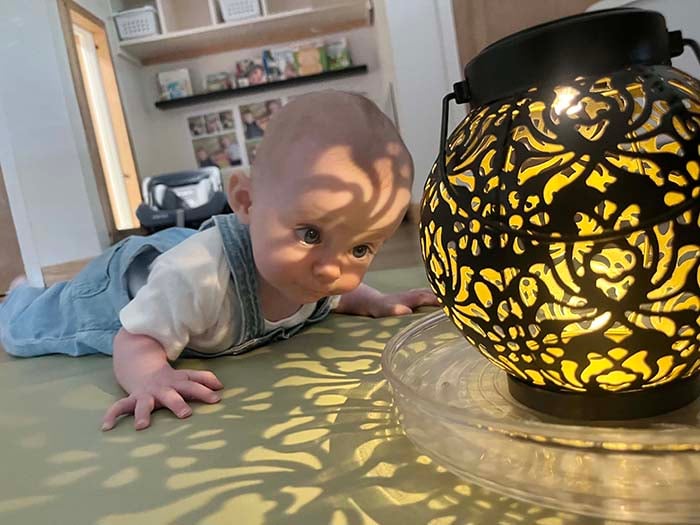
Documenting provides us a view into the worlds of children as each moment documented becomes a magnification of children’s nuanced actions and interactions. Once magnified, we can deepen our understanding of and connection to the children.
|
|
|
|
|
|
Through this view that documenting affords us, our image of the child is strengthened as their competencies, brilliance, innovation, and creativity become amplified through these lenses. We begin to see the everyday ordinary and mundane moments for the extraordinary events that they are through the eyes of the children.
Following this introduction you will encounter a mini story, told through a series of photographs, about an encounter between an infant and the many faces of light. Following the mini story you will encounter the interpretative meaning the teachers extracted from the photographs to gain a deeper understanding of the infants’ experience and see the world through their eyes. –Jen Selbitschka
READ THE ARTICLE >>
|
|
|
Reflect: Before you read the educators' insights about the documentation photos, try formulating your own observations first. What learning and discovery is present?
|
|
|
|
|
|
|
|
|
|
|
You’re Not Invited to My Birthday: How Belonging Becomes a Life Skill in Preschool
|
|
|
|
|
It started with a tower.
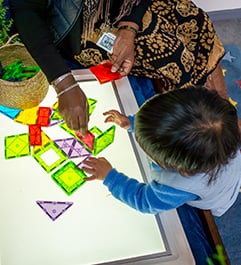
Two children had spent nearly ten minutes carefully stacking magnetic tiles on the carpet, watching the sunlight shine through the colored shapes. The structure grew taller and taller; a proud, slightly crooked skyscraper made of triangles and squares, built with focus, patience, and quiet teamwork.
|
|
|
|
|
|
Then, in a brief, unintended moment, another child ran past and brushed against it.
Crash.
The tower scattered across the floor in a burst of color. For just a second, the classroom went silent, the kind of silence that appears right before a storm. Then the words flew out, sharp and final:
“You’re not invited to my birthday!”
It wasn’t really about a birthday. There was no guest list being discussed. No cake. No party in that moment. What the sentence truly meant was something deeper and more emotional:
You ruined something important to me. Now I am trying to protect myself.
Beneath the frustration and the broken tower was something fragile and developing, a young child who did not yet know how to manage big feelings, protect personal space, express disappointment, or repair a moment of hurt.
And this is the real story unfolding in preschool classrooms every day. It is not simply a story about misbehavior or unkind words. It is the story of how children learn to navigate conflict, develop emotional language, and discover what it truly means to belong.
READ THE ARTICLE >>
|
|
|
Reflect: How might it be helpful to encourage children to ask for “friend space” when they need it, as the author describes in the article?
|
|
|
|
|
Exchange Community Voices
IS MADE POSSIBLE BY OUR DEDICATED SPONSORS:
|
|
|
|
|
|
|
|
|
|
|
Exchange Community Voices is brought to you by our Exchange Staff with Nancy Rosenow as Editor-in-Chief. Our collaboration with Exchange Strategic Partners supports early childhood professionals worldwide.
|
|
|
|
|
|
|
|
|
|
|
|
|
This email was sent to _t.e.s.t_@example.com by
Dimensions Educational Research Foundation, 7700 A Street, Lincoln, Nebraska 68510, United States
(800) 221-2864 | info@exchangepress.com
Exchange Press is a program of Dimensions Educational Research Foundation, a 501(c)3 non-profit organization.
Copyright © 2026 Dimensions Educational Research Foundation, All rights reserved.
|
|
|
|
|
|
|