YOUR WEEKLY DIGEST • VOLUME 1, ISSUE 19 • MAY 11, 2026
Holding Superman’s Hand: A Journey Into Early Childhood Education
BY SIMEON LEHMANN
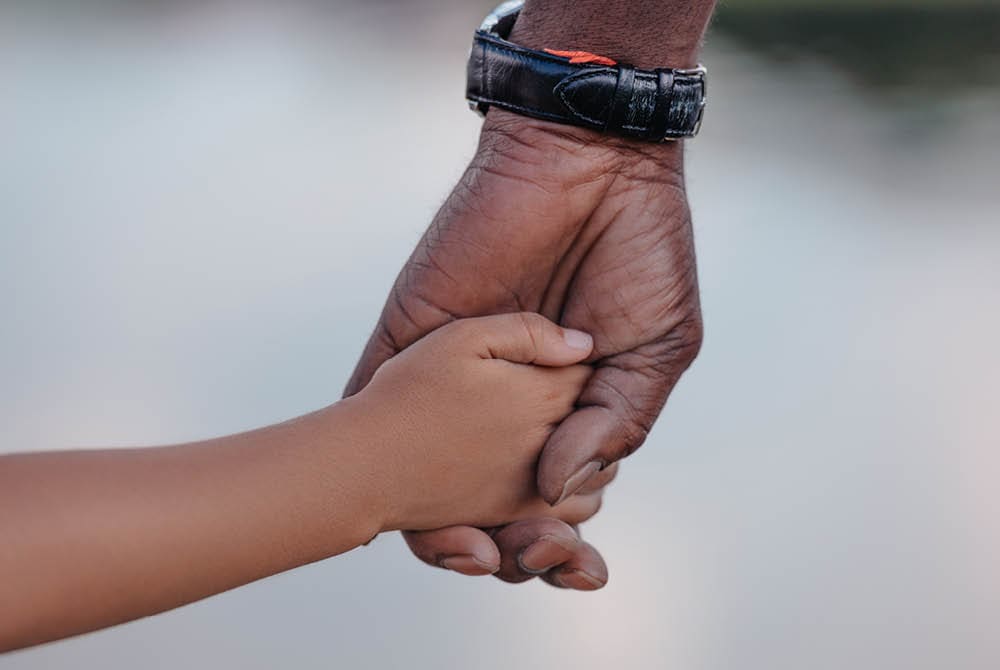
It’s the early 1990s and I’m walking along the dirt roads of Trinidad holding Superman’s hand. Neighbors step out to their front gates to greet him, offer a loaf of bread, exchange pleasantries, and share laughter. To my young mind, I was just being introduced to people, until I finally paid attention and realized what Superman was saying. "This is my grandson," he’d smile proudly. It was then that I understood: the Superman hand I was holding belonged to my grandfather.
Growing up in Northern New Jersey, with family working in New York City, I was fascinated by the contrast between places: one bustling with people who passed each other anonymously, the other a place where everyone seemed connected. In Trinidad, it wasn’t just about small-community closeness, it was about respect: for professions, for livelihoods, and for family. My mother, the oldest of six, carried tremendous responsibility, and my grandmother, a master of her crafts (cooking, sewing, baking, to name a few) anchored our family with skill and warmth.
Reflect: The author writes that he would like to remind others in the field of early care and education about their "power and potential." In what ways do you have power? In what ways are you working to use your full potential?
ADVERTISEMENT
Intergenerational Mentoring: Strengthening Early Childhood Communities
BY HELENE HARTE
"All of us, at some time or other, need help. Whether we’re giving or receiving help, each one of us has something valuable to bring to this world. That’s one of the things that connects us as neighbors—in our own way, each one of us is a giver and a receiver." –Mr. Rogers
The above quote by Fred Rogers (Mister Rogers) is a reminder that every member of a community has both gifts to share and need supports to thrive. We are stronger together and benefit from the knowledge, skills and experiences of each generation within early childhood communities. Our field is built on relationships and intergenerational mentoring is a way to nurture those relationships.
Trusting relationships are a core part of early childhood education. We are a community within our classrooms, programs and as a field. We are working collaboratively towards the goal of providing high quality experiences to help children reach their full potential and to be their authentic selves. The first guideline for Developmentally Appropriate Practice (DAP) involves creating a caring, equitable community of learners that builds on strengths, recognizes funds of knowledge and strives for a secure social emotional climate (NAEYC, 2020).
Reflect: How might using Universal Design for Learning (UDL) principles, as the author describes, strengthen mentoring opportunities between experienced and newer staff members?
ADVERTISEMENT
The Power of Play: Why Early Childhood Teachers Need to Play Too
BY NORLINE WILD AND MICHELLE CIMINELLI
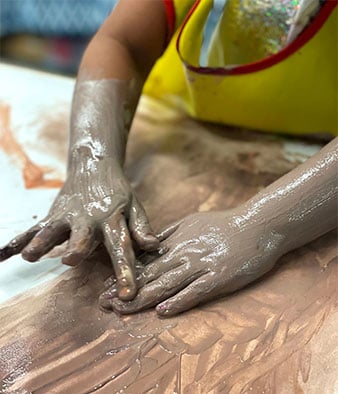
Miss Nora sat with one of her preschoolers, Zaiya, at a rectangle table covered in a long sheet of white paper. Skin-tone paints were placed on art palettes with brushes of different sizes. Zaiya spread paint up her arm to her elbow, proudly showing the color match she made. Seeing Zaiya’s excitement, Miss Nora covered her own hands in paint, feeling the smooth texture as she blended colors.
Miss Nora smiled, experiencing connection in this simple, playful moment and being reminded that play wasn’t just for the children, but for her too. The joy of exploration and tactile learning was a vital part of the classroom experience for everyone.
This moment illustrates that play is not only the work of children; it is also the work of their teachers.
Reflect: The authors write, "Embracing playfulness in their own lives allows educators to recharge and gain a fresh perspective, making them more effective and energized in their classrooms." How do you embrace playfulness in your own life?
Exchange Community Voices IS MADE POSSIBLE BY OUR DEDICATED SPONSORS:
Exchange Community Voices is brought to you by our Exchange Staff with Nancy Rosenow as Editor-in-Chief. Our collaboration with Exchange Strategic Partners supports early childhood professionals worldwide.
FOLLOW US
This email was sent to _t.e.s.t_@example.com by
Dimensions Educational Research Foundation, 7700 A Street, Lincoln, Nebraska 68510, United States (800) 221-2864 | info@exchangepress.com